Salwa Font: Modern Calligraphy for Handmade Products
Sitting at my workspace with a fresh batch of soy candles cooling on the rack, I realized my current labels lacked the warmth and personality that define my small business. This search for the perfect typeface led me to Salwa, a modern calligraphy font created by RT Creative 86 that instantly transformed my product presentation from generic to genuinely artisanal. As makers and sellers, we know that typography is often the silent ambassador of our brand, and finding Script Handwritten Fonts that balance elegance with readability is crucial for everything from packaging to digital downloads.
Salwa for Candle Labels and Artisan Packaging Design
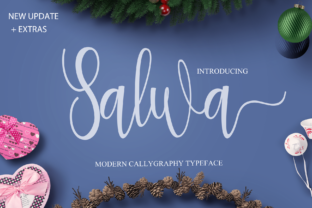
When applying Salwa to candle labels and artisan packaging design, the font’s fluid strokes mimic the organic nature of handmade goods in a way that standard system fonts simply cannot achieve. Salwa is a modern calligraphy font created by RT Creative 86 that features natural variations in stroke width, giving printed labels the authentic appearance of hand-lettering without the inconsistency of doing it manually for hundreds of units. In my own testing on matte vinyl sticker paper, the letterforms remained crisp even at smaller sizes, which is essential when fitting scent names and safety warnings onto compact jar surfaces.
The visual personality of this typeface brings a softness to packaging that aligns perfectly with boutique branding. Unlike rigid display fonts, Salwa offers a rhythmic flow that guides the customer’s eye across the label, creating an emotional connection before they even smell the product. For fellow crafters designing soap boxes, tissue paper stamps, or thank-you cards, this script handwritten style adds a layer of perceived value. It signals to the buyer that attention to detail was paid to every aspect of the unboxing experience. When pairing this creative font with packaging, I found that keeping ample negative space around the text allows the intricate swashes to breathe, preventing the design from looking cluttered on physical merchandise.
Designing Wedding Invitations and Stationery with Salwa
Creating wedding invitations and stationery with Salwa requires understanding how its romantic aesthetic functions within formal editorial design layouts. Salwa serves as an exceptional header font for invitation suites, where its sweeping capitals and delicate ligatures set a tone of sophisticated celebration. As one of the most versatile Fonts in the script category, it bridges the gap between traditional copperplate styles and contemporary minimalist trends, making it suitable for both classic church weddings and modern outdoor ceremonies.
In practical application for stationery designers, readability remains paramount when using any script handwritten typeface for important details. While Salwa shines for couple names and "Save the Date" headers, I recommend pairing it with a clean sans serif or simple serif font for the logistical information like time, venue, and RSVP details. This font pairing strategy ensures that the invitation remains functional while retaining its decorative charm. During mockup phases for welcome signs and seating charts, testing Salwa at various scales helps determine the optimal size for cutting machines like Cricut or Silhouette. The connected letterforms are generally smooth, but always verify that fine lines will hold up when cut from cardstock or vinyl for large-format signage.
Optimizing Salwa for Digital Printables and Wall Art
For creators selling digital downloads, optimizing Salwa for printables and wall art involves leveraging its high-resolution rendering to produce gallery-worthy typography pieces. Salwa is a modern calligraphy font created by RT Creative 86 that translates beautifully to large-format prints because its vector-based construction prevents pixelation at poster sizes. Whether designing inspirational quotes for nursery decor or elegant menu templates for restaurant clients, the font’s inherent rhythm provides a professional finish that justifies premium pricing in digital marketplaces.
When designing printable wall art, consider how the font interacts with different background textures and colors. Salwa’s balanced weight distribution makes it legible against watercolor washes, linen textures, or solid dark backgrounds often used in modern home decor. For template creators, including pre-set text arrangements using Salwa can significantly increase the utility of your digital products. Buyers love plug-and-play designs where the hard work of kerning and spacing has already been done. Remember to check the specific commercial licensing terms included with your purchase to ensure you are cleared to sell end-products featuring this typeface, especially if you plan to offer editable Canva or Corjl templates.
Salwa Typography Tips for Cutting Machines and Merchandise
Using Salwa for cutting machines and physical merchandise demands technical awareness to prevent production issues during the weeding and transfer process. Salwa belongs to the category of Script Handwritten Fonts that feature varying line weights, which can sometimes pose challenges for intricate vinyl cuts on textured fabrics or glitter cardstock. Before committing to a full production run of tote bags, t-shirts, or mugs, always perform a test cut to ensure the thinner connecting strokes do not tear or fail to adhere properly.
For apparel and textile applications, heat transfer vinyl (HTV) works best with Salwa when the design is sized appropriately; extremely small text may lose definition after washing. Conversely, for laser-engraved wood signs or acrylic cake toppers, the font’s flowing connections create a continuous line that reduces start-stop points, resulting in cleaner burns and cuts. When designing for merchandise, think about the curvature of the surface; Salwa’s natural baseline flexibility allows it to be arched gracefully over pocket placements on shirts or centered on curved mug surfaces without looking distorted. This adaptability makes it a reliable choice for makers who produce diverse product lines under a single cohesive brand identity.
Pairing Salwa with Supporting Typefaces for Brand Consistency
Achieving brand consistency involves pairing Salwa with supporting typefaces that enhance rather than compete with its distinctive calligraphic character. Salwa is a modern calligraphy font created by RT Creative 86 that carries significant visual weight due to its ornamental nature, so it performs best when anchored by understated secondary fonts. A geometric sans serif provides a contemporary contrast that grounds the design, while a traditional serif can evoke heritage and timelessness for vintage-inspired brands.
- For Product Photography Overlays: Use Salwa for the main hook or product name and a light-weight sans serif for descriptive tags or pricing to maintain hierarchy.
- For Social Media Graphics: Let Salwa dominate Instagram stories or Pinterest pins as the primary focal point, ensuring the text is large enough to be readable on mobile screens.
- For Website Headers: Implement Salwa in hero banners to establish mood, but switch to highly legible web-safe fonts for body copy to reduce bounce rates.
- For Business Cards: Utilize Salwa for the logo or name element only, keeping contact information in a clean, standard font to ensure scannability and professionalism.
Ultimately, integrating Salwa into your creative workflow is about more than just installing a new file; it is about elevating the storytelling capability of your handmade business. Whether you are printing labels late at night or finalizing a client’s wedding suite, this typeface offers the artistic nuance that distinguishes true craftsmanship from mass production. By respecting its technical requirements and styling it with intention, Salwa becomes not just a tool, but a signature element of your maker’s journey.